The typographic social cut,
now reachable on-network
A creative-agency field test handed an agent a real social-editing brief — captions that hit every word, an overlay clip that drops in on a beat, a16z-style molecular graphics, a grade. The network couldn't reach it, and the job shipped at $0.00 network spend. Four capability fixes closed the gap. This is the brief, re-run end-to-end as four reproducible tool calls.
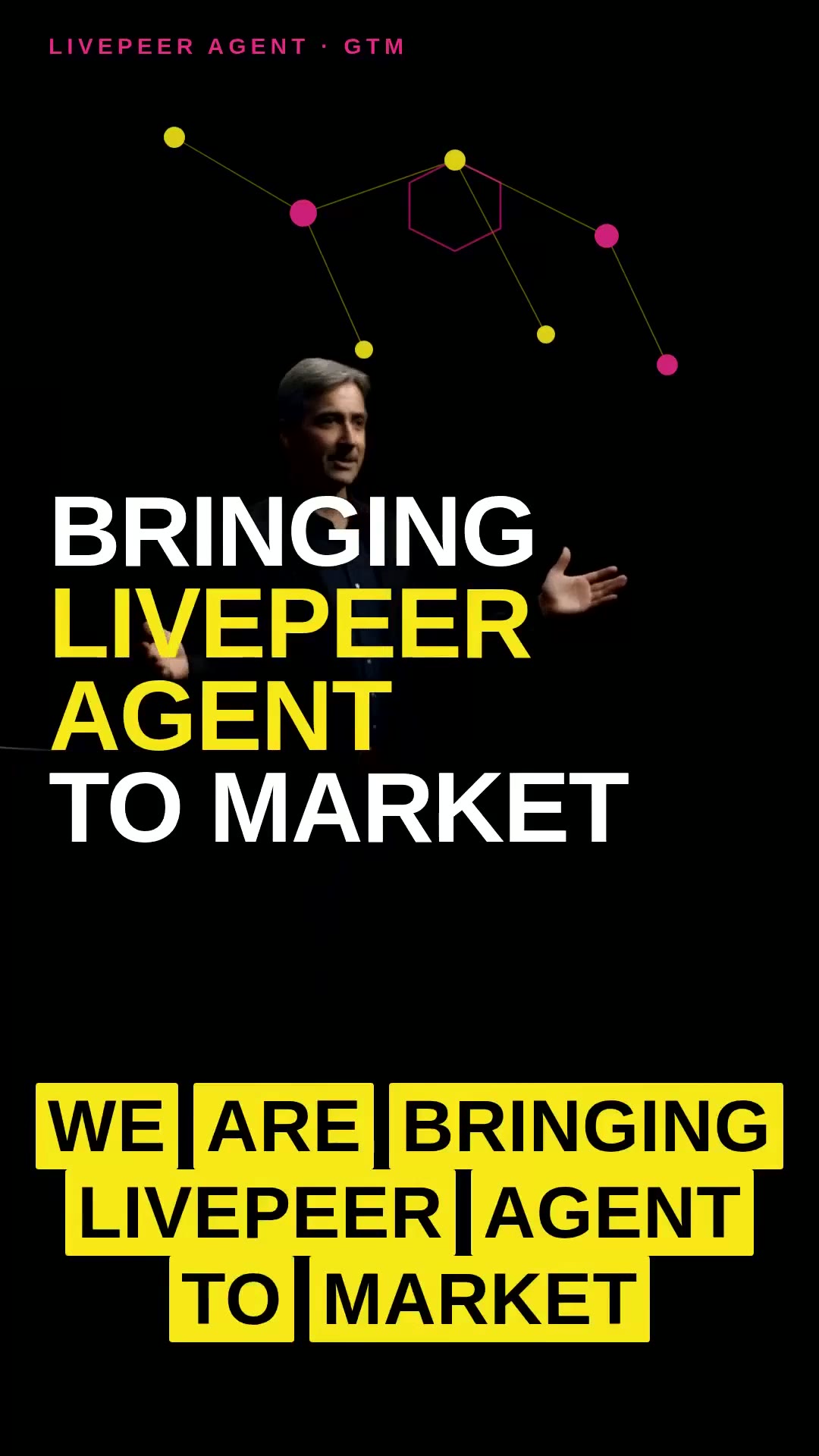
hyperframes-render pass. Condensed hero type (brand word in yellow), an a16z-style molecular network, and word-hit caption slabs — pixel-perfect HTML/CSS composited over the footage, then graded.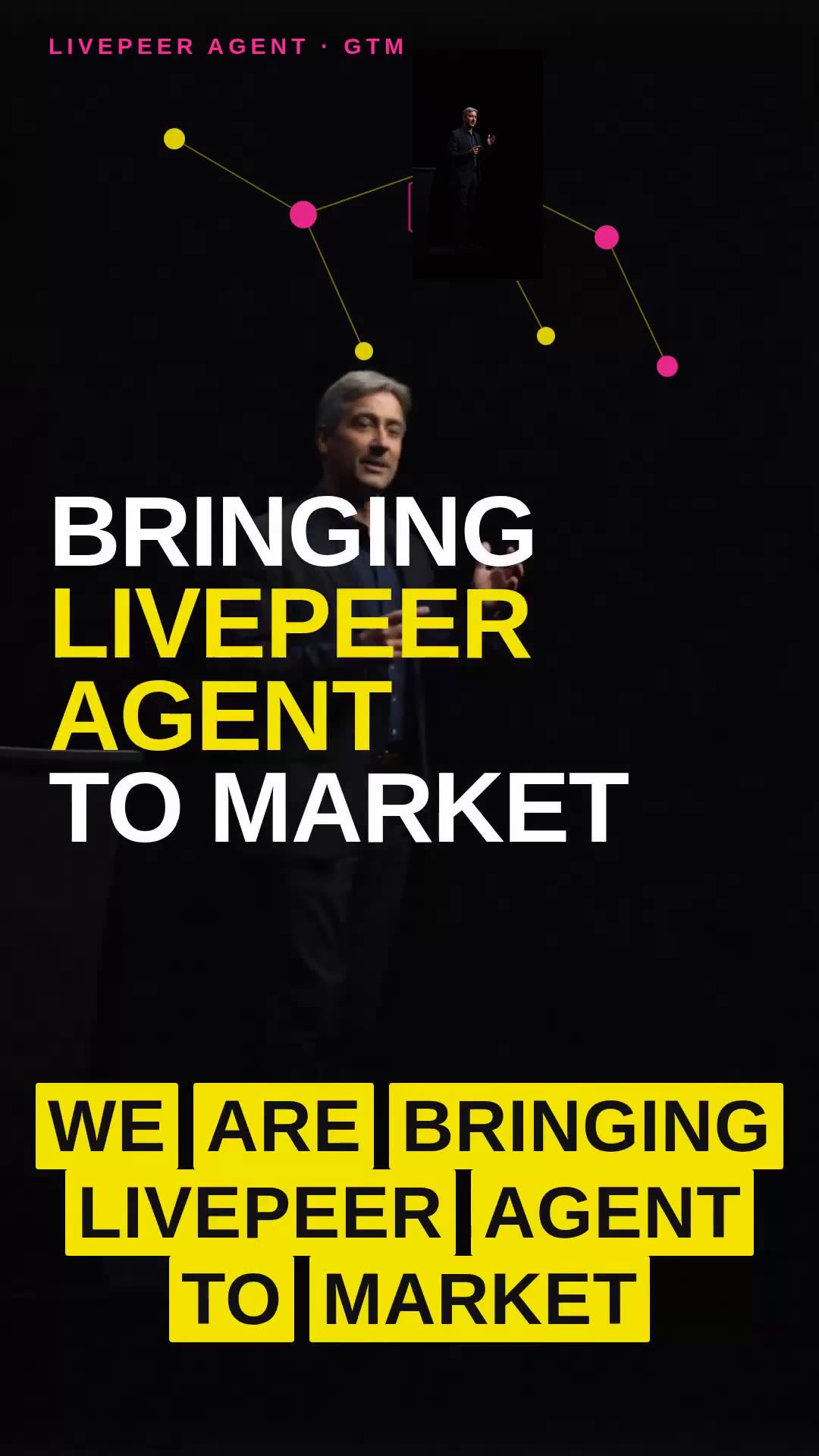
x:0.6 y:0.04) appears only in the 1.5–3.5s window — the "drops in when I raise my hands" beat. One overlay call, no scene-slicing.Four layers, four calls
Word-level captions RC-3
transcribe(granularity:"word", burn:true, font_size, font_color, outline) — word granularity routes ASR to the live whisper-word cap for per-word timings (the "hit every word" effect), with fill / stroke / size / position forwarded to the burn. No more local faster-whisper.
On-video typography + graphics RC-1
hyperframes-render(background_video_url, html) — the condensed type, kinetic captions, and molecular-network SVG are ordinary HTML/CSS composited over the footage. RC-1 published its input schema, so an agent can call it first-try instead of a probing round-trip.
Timed, positioned overlay RC-2
overlay(image_url, x, y, scale, start_sec, end_sec) — a picture-in-picture at any x/y, visible only in a time window. Before RC-2 this forced slicing a 17s brief into 14 scenes; now it's one call.
Finishing colour grade RC-4
ffmpeg-colorgrade(preset:"cinematic") — a named look or explicit brightness/contrast/saturation/gamma. The finishing grade the tool caps were missing — now a real cap, stated rather than discovered.
Make it yours
The same four calls cover a wide family of cuts — swap the design system, the overlays, the grade. The repeatable, parameterized recipe is the playbook:
| Use case | What changes |
|---|---|
| Neutral / UI design system | Sentence-case type, weight-not-colour captions, no decoration, footage is the only colour — pass a design_ref and it's honored. |
| Product / e-commerce | Product b-roll + a price/spec lower-third + a detail-crop PiP at the reveal + a vibrant grade. |
| Localized versions | Re-run the caption step per language (auto-detected word timings); keep the typography layer. |
| Brand-locked repeatability | Bind a brand kit (palette + finishing chain) so every cut matches. |
▸ Open the playbook — fill in the brief and run it against your own footage.
chatterbox-tts → talking-head → whisper-word/transcribe → hyperframes-render → ffmpeg-overlay → ffmpeg-colorgrade. Born from the a16z agentic-editing field test that RC-1…RC-4 closed.